

If you are looking for an answer to the deepest philosophical questions… like what is the meaning of life, and how do subatomic particles exist in two states simultaneously… I have an even deeper one.
What is the meaning of “Cotton Eye Joe” song by Rednex?
How did it manage to be so seamlessly catchy but void of any real lyrical substance at the same time? It’s something that defies modern convention and common sense. I hate the song, but I can’t help but sing and dance to it. So secretly or subconsciously, I must really love it.
How can that possibly be?
It’s a confusing conundrum of cheese that bends the laws of space, time, and stilton. Was it written by communist behavioral scientists to purposely twist my melon into a new system of conformity? Is there more to the song than meets the cotton eye?
Excuse the bad puns, but If I have to suffer, you do too. Let’s suffer together like Buddhism because that’s the only way we can learn true acceptance and begin on the righteous path to forgiving people who write songs like this.
The Origins of Cotton Eye Joe
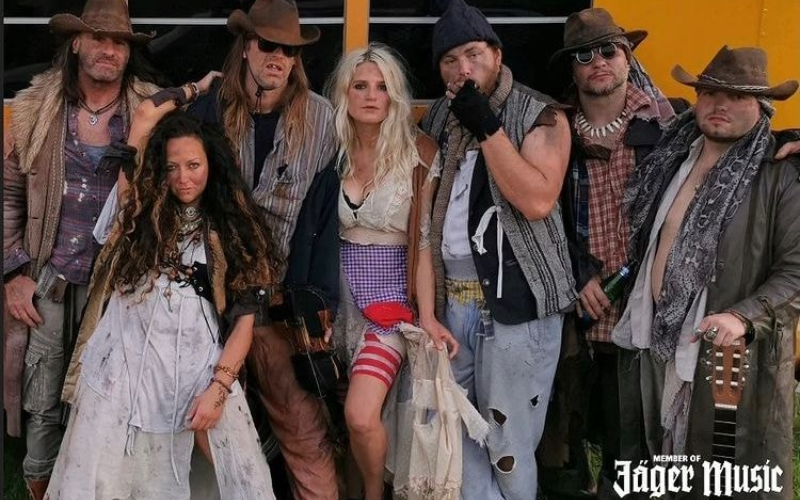
Did you know that a song named “Cotton Eyed Joe” has been around since before the American Civil War? You learn something new every day.
It was a traditional American folk song that has been sung for a hundred years. At least until a crazy group of Swedish record producers stuck their fingers into the pot and did their own dance remix version. I knew Scandinavians were to blame for it. Somehow, they always are. Themm or the Germans!
It’s a folk song that has been sung for a very long time and was covered by numerous bluegrass-style bands. Over time it developed into a Country Music line-dance style song. The quick step and up-tempo vibe of the song are infectious and contentious in the worse possible way. Like Ebola, but with less charisma and more toxicity with less chance of survival.
When Was Cotton Eyed Joe Written?
No one knows when and where or who wrote “Cotton Eyed Joe.” That’s essential because nobody wants to take the blame. In a way, it’s similar to the “House of the Rising Sun” song that was popularized by the 1960s Rock band, The Animals.
Both songs were written sometime in the 1800s and were remade for the modern world. And nobody really knows where they came from. But the only difference is one of them is a good song. I’ll leave you to figure that one out.
The only thing we know for sure…
“Cotton Eye Joe” predated 1880 because it was mentioned in an 1882 book by Louise Clarke Pyrnelle named Diddle, Dumps, And Tot, Or, Plantation Child-Life. Try saying that after ten beers and ten “Cotton Eye Joe” listens.
In the book, the author, who was born in 1850, says she knows the song was sung by the slaves who happened to work on a plantation owned by her father. Cotton… 1800s America… Slaves… we are now starting to see a pattern. It’s probably a song about racists! The Swedish band who remixed the track is called Rednex, after all.
Moving into the 1900s…
There are several accounts of “Cotton Eyed Joe” from the early part of the 1900s. Numerous people in the 1920s said they remember the song from before the American Civil War. And most of these accounts talk about slaves singing it. So, it was probably derived from some kind of African-American work song. Although, there are believed to be several versions.
The famous chorus hook with the same or similar lyrics has even appeared in print many times. Here is that chorus hook, just in case you forgot the catchiest song of all time: “Where did you come from? / Where did you go? / Where did you come from Cotton-Eyed Joe?”
Was Joe a Slave or Slave Master?
Not wishing to be too presumptuous here, but I get the feeling that the Joe in question with said cotton eyes was some kind of redneck that ran the plantation. Although, I might be incorrect. And the slaves in the cotton fields were blaming Joe because he was oppressing them. That’s one way to put it.
In some of the earlier versions of “Cotton Eyed Joe” going back to 1922, the final line of the song says something about Joe being sold “Down to a Guinea Gall.” This indicates that Joe was probably the slave, not a plantation owner or slave master. Maybe Joe the slave stole the singer’s potential love interest, and that’s why Joe was to blame for him not getting married.
Catchy Line Dancing Polka Style
When you think about the modern dance remix version of “Cotton Eye Joe” by Rednex, it’s a very uplifting and upbeat song. In effect, the original version was a polka-style track that was like a traditional type of dance music, so to speak. It was a circle/line dancing song. This two-step style song was meant for dance.
“Cotton Eye Joe” by Rednex
When the Swedish Euro-Pop group, Rednex, released their version called “Cotton Eye Joe” without the ‘d’, it was most people’s introduction to the song. Sure, it was one of the most popular songs in 1994 and a fantastic homage to the original. I didn’t think that at the time. But now that I understand more about its history, it becomes obvious that, in reality, Rednex did a very good job.
They took the original two-step vibe of the song and remixed it to a dance beat. I love the way they used banjos and fiddles that you’d find in older Country Music to give it an authentic sound. They made another version in 2002 where they amped it up a bit and created what is now known as the Dance version of “Cotton Eye Joe”.
The commercial success of “Cotton Eye Joe”…
Rednex’s original version was released in August 1994. It spent several weeks at the top of Pop charts in the UK, Switzerland, Austria, Belgium, Canada, Denmark, Sweden, New Zealand, The Netherlands, and many more. More than I can be bothered to mention. It was gigantic and the epitome of a massive commercial hit. But it was so cheesy that it made blue cheese taste like cardboard.
In some European countries, it even spent 15 weeks at the top of the charts. It combines Country, American Folk, Euro-Pop, techno, and Dance Music to create a concoction so catchy that you needed a face mask to protect yourself. The words “cultural phenomenon” are thrown around like dwarfs in The Wolf of Wall Street. But that’s the only way to explain its success in any kind of conventional sense.
It was so popular that it even made line dancing a craze again. High octane, high energy, and high pulses all get higher when this comes on. There’s no way to explain it in any normal manner. I’d love to tell you how Rednex remixed this great old song and repackaged it for modern times. But the truth is that we finally have someone to blame for its popularity, so that’ll do.
What’s the Real Meaning of “Cotton Eye Joe” Song by Rednex

After looking at all the factors and deciphering the so-called lyrics, I’m going to go out on a limb and say this is probably a song full of racial stereotypes before the public knew what that even meant. I think Rednex need canceling, not because they are racist, but because they inflicted this song onto the masses.
Hilarity aside, you can probably come up with different interpretations of “Cotton Eye Joe” by Rednex. The average person struggles to articulate what “Cotton Eye Joe” is about because nobody really knows.
Some people think that “Joe” is not a person…
Rather, it is the name for the dance that has always accompanied the folk song. But, what I take from the lyrics is this song was written by someone who had his sweetheart stolen by “Joe.” He and his cotton eyes rolled quickly into town, banged his broad, and made out of town before he could be blamed for the pregnancy. Maybe 1800s, safe sex was not telling the woman where you lived?
“Joe” stole his potential wife so he couldn’t get married. And it messed with his head so badly that he wrote a song about it. Boy, does Joe’s reputation precede him even 200 years later.
Alternative Meanings to “Cotton Eye Joe”
Because no one really knows the meaning of “Cotton Eye Joe,” it has opened the door to a bunch of alternative meanings. For example, the term ‘cotton eyed’ has been surmised to mean many things.
Some say it means being drunk. Others have stated that the term in 19th-century American slang means someone who has amazing whites in their eyes. The drunk theory holds tight because the lyrics talk about a man coming into town and stealing his women at a dance where it is assumed that alcohol was present.
Some stranger theories suggest that the cotton eye part is explaining the eyes of a black person who has either syphilis or glaucoma. But that’s a reach, in my opinion. While most people believe that the ‘cotton’ part refers to someone who worked in the cotton fields as a slave, the truth is that nobody knows, and that’s the fun part.
Nina Simone’s “Cotton-Eyed Joe” Version
I’ve always been a massive fan of the singer-songwriter Nina Simone. There was a real sense of pain not only in her music and vocal delivery but also in her eyes.
She made her version of “Cotton Eyed Joe” in 1959. And, when considering the racial tension at the time, it’s quite a succinct version. But, in all fairness, the version didn’t shed any light on the meaning of the original, so I’m just babbling on.
Hers is a slower and more painful interpretation. But that’s not surprising if you are a Nina Simone fan. Also, she told the story from a woman’s perspective. Therefore, you can’t take much from her version when trying to understand the older version. But it’s definitely worth listening to.
Wondering About The Meaning Of Other Famous Songs?
Well, check out our thoughts on The Meaning Behind “Cats in the Cradle” by Harry Chapin, The Meaning Behind “Sweet Caroline” by Neil Diamond, The Meaning Behind “Crazy” by Gnarls Barkley, The Meanings Behind Wade In The Water, and the Meaning of “Ring Around the Rosie” Song Lyrics for more musical insights and interpretations.
Meaning of “Cotton Eye Joe” Song by Rednex – Final Thoughts
Rednex has a lot to answer for. If they had left the song alone, we wouldn’t be having this conversation. And, I wouldn’t be line dancing at my sister’s wedding. They have many crosses to bear. But don’t worry. Karma catches up with dance music remixers like them. At least we have someone to blame.
Nobody knows where the original “Cotton Eyed Joe” song came from, but it’s been fascinating to research its history. However, we are not much the wiser about what it’s all about. So, maybe I should have spent my time underwater basket weaving for beginners instead. I surmise that it’s a song with strong racial undertones, but the modern-day cancel culture doesn’t know who to cancel for it.
Until next time, happy listening.
