

No one can demonstrate exactly when music began. In its earliest forms, it could just have been clapping or beating something on something else. But, we do have an idea, and it almost certainly did not appear first in the West, but in Asian countries.
Asian string instruments have been around for a long time, and we are about to take a look at some of the earliest. Then, we will move through the centuries to see if and how things have changed.
Traditional and Modern
You will find that a number of the traditional instruments of Asia are still played, especially in rural areas and at cultural ceremonies. But, there has been tremendous growth in the sale of what we might term “modern” Asian instruments as well.
Copies of guitars by Fender, especially the Stratocaster, are common and can be seen everywhere. You will also get copies of other makes like Gibson, although not as many. Occasionally, you might even find the real thing, not a copy.
Western Classical music has also established itself, and there are some excellent symphony orchestras, especially in Japan.
How Far Back Do We Need To Go?
As I said at the beginning, we don’t really know. The vastness of the Indian continent means there was diversity by area and individual Indian cultures. There are cave paintings that are 30,000 years old that depict musicians playing something resembling a bowed lyre.
They also depict dance which indicates that music was used for entertainment. Some of the instruments used are still in use today. Although, the most famous Asian stringed instrument, the Sitar, only came about in the 18th century.
The sitar has become enormously popular today. Playing Indian themes and styles, but it is also used in a modern setting. We can thank The Beatles and Ravi Shankar for that.
In China
In China, documents and some artifacts show that music was well-developed in society by the Zhou Dynasty. That was about 1120 BC to 250 BC. Since that time, the music and the instruments have continued to develop.
In Vietnam
Music was used in Vietnam for religious purposes and festivals. It still is, and like the other Asian countries, the diversity of the culture led to various genres with their instruments.
You can see the influence of Chinese musical culture on the instruments in Vietnam, but not in the music. Music appeared in the Royal Courts of Vietnam about the beginning of the 11th Century.
Music Develops in Asia
This kind of natural development wasn’t limited to those countries. It was occurring all across Asia. And, as trading developed and multiplied, especially across countries with land borders, so did the music.
Traders often traveled with their instruments. Firstly, to entertain themselves, and secondly, to entertain others if they got the chance. Ideas for instruments and styles of music crossed borders and were developed locally.
Not so much in the styles of music…
But, in the various instruments, we shall look at, there are certain similarities in their design. And some of these eventually filtered across to the West as trading routes expanded.
Today, the biggest music market in Asia is Japan. Especially for physical and digital music sales. Asia has its own, in some cases, highly thought-of instrument manufacturers. And there are Western manufacturers with manufacturing plants in many Asian countries.
But, we are not concerned with that as much as we are with traditional Asian string instruments. We will look at instruments from:
[bl]- Japan.
- China.
- Vietnam.
- India.
We will see the similarities that exist between them but also how they are unique to their culture. Let’s kick off with Japan.
Japan
Music plays an important part in Japanese life and culture and has done for centuries. Today, as I remarked already, it is the richest music industry in Asia and one of the most commercially successful in the world.
The Japanese look upon music not only as entertainment but also as a way of expressing themselves. The instruments they produced over the years revolutionized the culture of Japan. Some are still used today, not only in Japan but all around the world. Let’s look at four of these instruments.
Shamisen
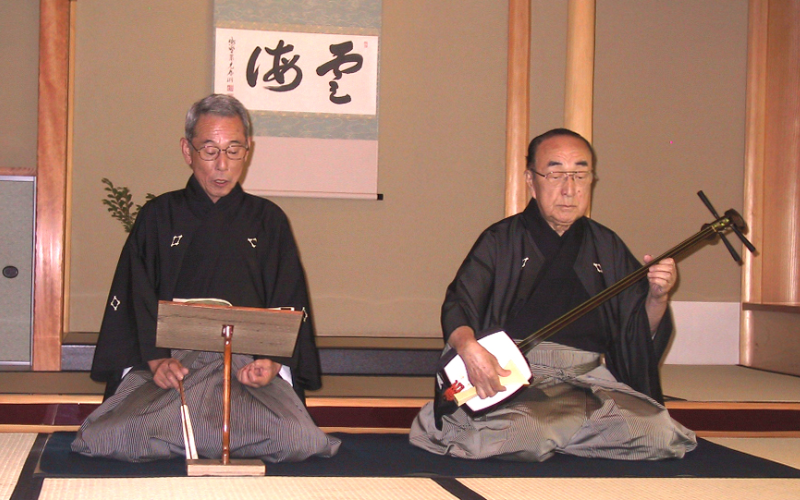
Shamisen is so-named because, in the Japanese language, it means “three strings.” It is thought that the Shamisen arrived in Japan between 1600-1850. Known in Japan as the Edo period, it was a time of growing prosperity, and entertainment was important to social life.
It is a similar instrument to the Sanxian from China and the Sanshin from nearby Okinawa island. The Shamisen was originally covered in dog or cat skin, unlike the Sanxian or Sanshin, which had a python skin covering.
It wasn’t long before skins were replaced by an early plastic covering.
Building Skills Were Needed
These were not easy instruments to build, and the skills needed to be had to be developed. The body was constructed of four pieces of hardwood fitted together so that it made a square frame.
The skins were stretched over this to form a body that resembles a drum. The neck was similar in length to that of a modern-day guitar, but it was made in four pieces. There is not a fretboard that fits on the neck or frets as we know them, and it has a nut made of brass.
How it is played…
It has three strings, as I said, two of the strings rest on the nut, but the third is positioned over a cavity in the nut. This creates the buzzing sound of the instrument when played. You played the Shamisen with a “baichi,” rectangular-shaped plectrum.
This is larger than what is used today on the guitar. You plucked the strings with the baichi. This could also be used to strike the body of the instrument to create some basic percussive sounds at the same time. If you want to know more information on the instrument, this guide will be of interest.
Sanshin
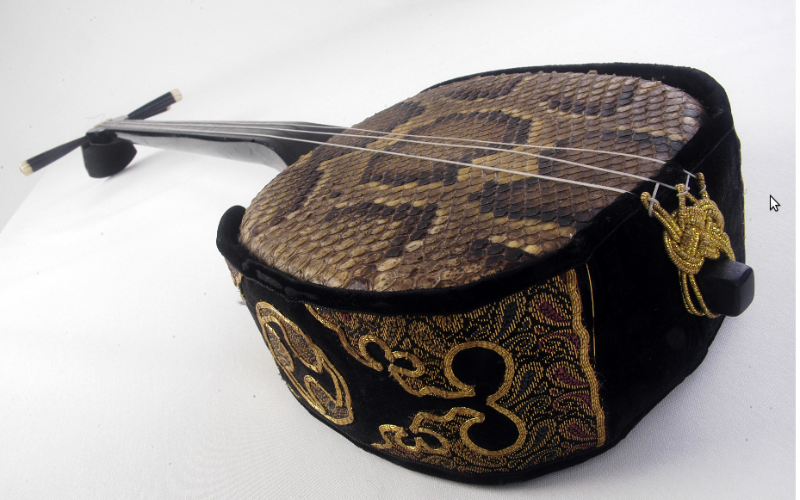
Sanshin means, as it does for our previous instrument, “three strings” in Japanese. The Sanshin is also closely aligned with the Sanxian from China, as was the Shamisen. However, there are some differences, and it is not just a copy.
The Sanshin is considered the national instrument of Okinawa. It is known as the national instrument because many Okinawans consider themselves to be a separate race from the Japanese on the larger islands.
They weren’t assimilated into Japan as we know it until the 1870s and developed independently, including with their music. Many people on Okinawa can trace their ancestry back to China which is probably from where the Sanshin took its basic form.
A Difference in Technique
As with the Shamisen, the build is not straightforward. But, with the Sanshin, the body is covered with snakeskin rather than dog or cat skin. Something else that is different is the plectrum used and the technique employed to play.
With the Shamisen, the pick was also a large triangular shape. The Sanshin, however, uses a small pick that fits over the end of your finger to pluck the strings. Much as is used today by some who use a fingerpicking style on guitar or banjo.
Furthermore, you could liken the sound of the Sanshin to a modern banjo. However, the Sanshin has a much warmer timbre.
A Cultural Legacy
It is an instrument that means a lot to the people of Okinawa and is at the center of their Folk music. It’s an important part of the rituals surrounding the deities of the Ryukyu culture. You will find it is still used for festivals, weddings, and other family gatherings.
Kokyu
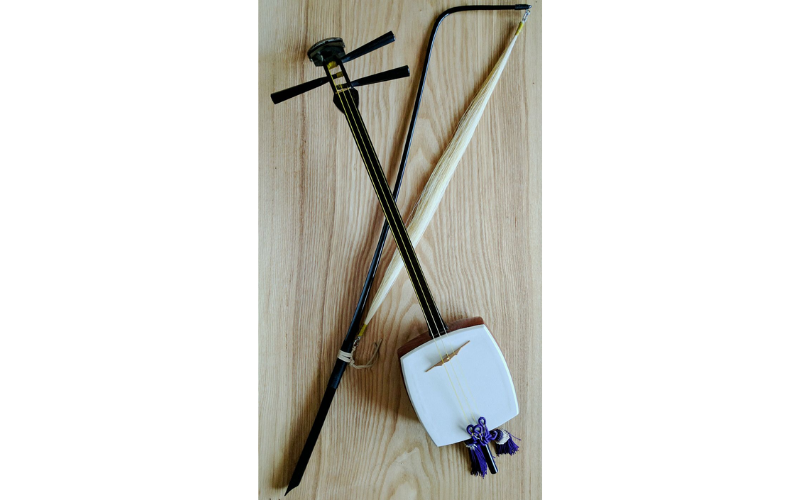
The Kokyu is the only one of the traditional Japanese string instruments played with a bow. Visually, it resembles the Shamisen with its distinctive box-like shape and neck, but it is rather smaller.
It has its roots in Okinawa…
And there is a version that is still used on that island called the Kucho. There are some design differences between them in that the Okinawan Kucho has a round body. The Kokyu is square.
It has three strings like the Shamisen and the Sanshin, but this instrument is played seated using a bow. As you would see today with someone playing the cello. The bow is made of wood with horsehair. It will sometimes be included as an instrument of the Sankyoku ensemble.
This is a Japanese musical ensemble featuring three instruments. The ensemble features a flute, a lute, and a Koto zither. The Kokyu will sometimes be used as a replacement for the flute if the music requires it.
Koto
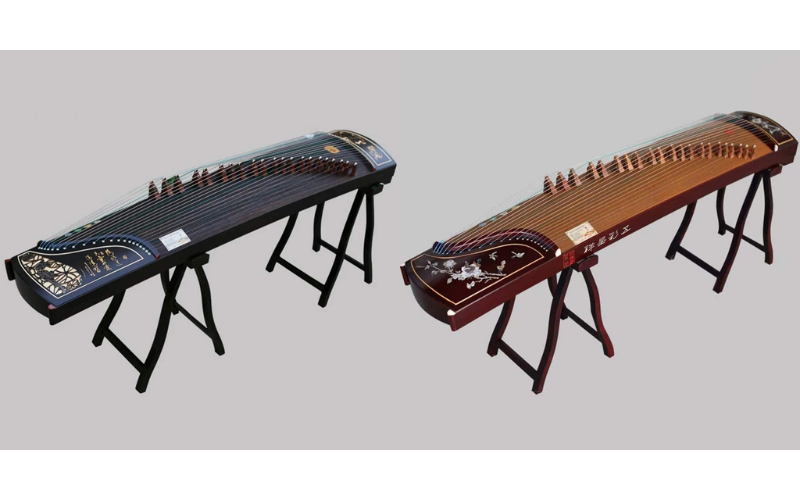
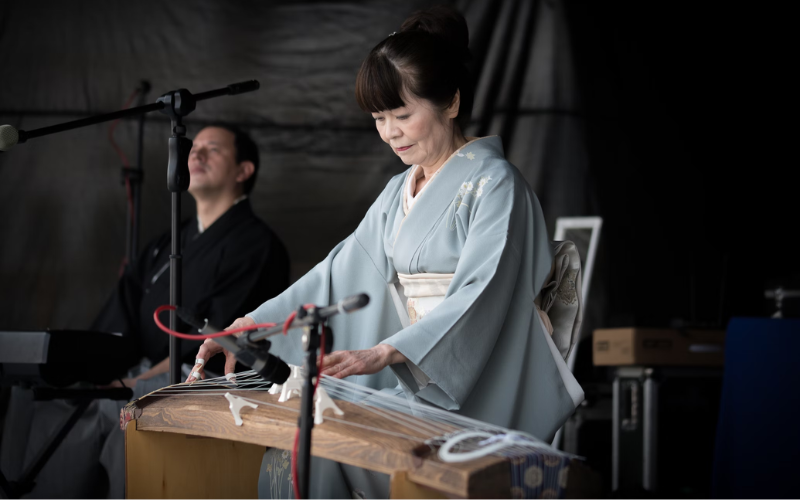
And finally, from Japan, the Koto. This is considered to be the Japanese national instrument. Its sound will immediately fill your imagination with ornate temples and pink lotus blossoms. It is basically a zither that is plucked.
Different Versions
There are various sizes of Koto with different numbers of strings. Perhaps the most common is the 13-string version. This is a professional version. The strings are stretched over movable bridges. You can get a bass koto that has 17 strings and, these days, a 20-string version. It is made from Kiri wood.
The 21-string version of the Koto has gained popularity with the advancement of playing techniques. The influence of modern Western music has also meant that there was a need for some extra strings.
Japan instigated a program of learning music in the 1870s that included familiarity and study of Western music. That music was often played on a koto which brought forth a variety of styles of play.
Example of modern music with the Koto…
I have recently seen a young Japanese girl play AC/DC’s “Back In Black” on Koto. And she included all of Angus Young’s notes from his solos and riffs.
An Instrument With a History
It was used in the Imperial court around 720 BC during the Nara Period. It remained little changed until the 17th century when the instrument was taught to a blind man. His disability forced a new style of playing, which is what is used today.
His name was Yatsuhashi Kengyo, and he is known as the “Father of the modern Koto.” Its smooth harp-like sound is very appealing and, for that reason, is often used in romantic music.
It has seen some genre crossovers…
You will find the Koto in Jazz played by Reiko Obata. Of course, it is also found in the traditional Japanese style and played by Miya Masaoka.
Japanese music has a long and impressive history both in its culture and its traditions, as you can hear in Japanese Traditional Koto And Shakuhachi Music and Japanese Traditional Music.
China
Chinese culture has existed for thousands of years. And, since 2000 BC, a rich history of music has been created. The Imperial Bureau of Music was set up during the Qin Dynasty in about 200 BC. That brought forth new ideas and instruments.
Some of those traditional stringed instruments of China are still with us today. Let’s take a look at two of the most influential in Chinese Music culture.
Erhu
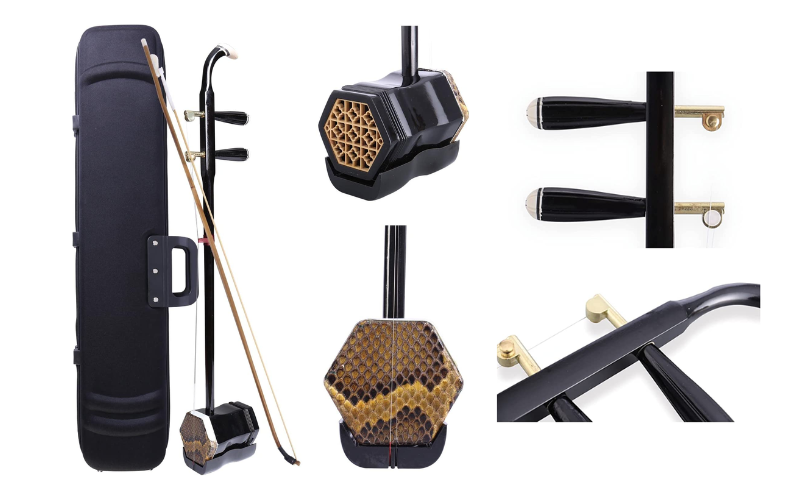
The Erhu is designed to be held vertically and played with a bow, as you would see in the west with a cello. However, the Erhu has two strings and not four but is still played with a bow. I will come back to the bow later.
It is made in two parts, as a guitar might be with the body and the neck. The body acts like a resonating chamber and has a snakeskin soundboard on the top and a carved wooden back. It rests on a velvet cushion which is usually red.
The neck is one piece and has two tuning pegs for the strings. It is quite long and made from hardwood. The neck has no fingerboard, and strings are not pressed down onto the neck to make the notes.
The Bow
This is quite interesting because it has traditionally been made from bamboo. For the hair of the bow to create sound from the strings, it needs to be taut, as on the Violin, Cello, etc. But, there wasn’t the technology to achieve this before hair-tightening mechanisms were invented.
Players, therefore, had to hold the hair at one end of the bow tightly in their hand and apply tension to keep the hair taut to play.
They are still used today at festivals and seen in ensembles on TV and at weddings and other functions. For example, Chinese Traditional Erhu Music.
Guqin
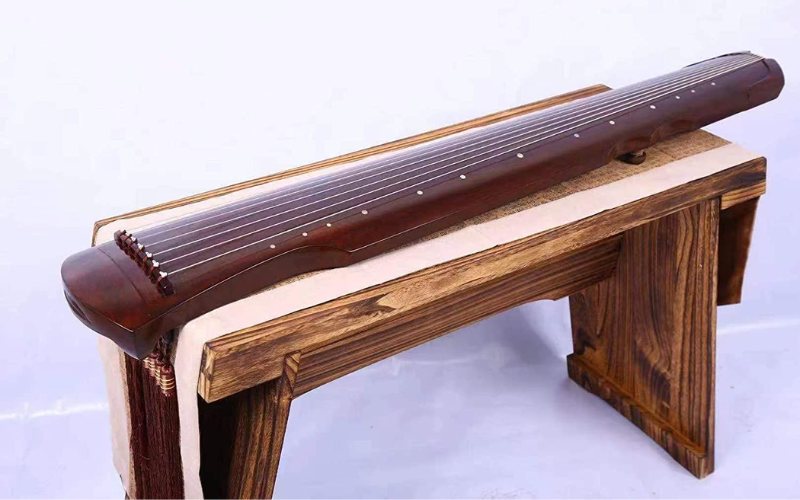
This is a unique instrument with a very interesting background. It is designed so that it has a resonator with two holes of different sizes with a soundboard above. Over the soundboard are stretched seven strings, and the instrument is played like a horizontal harp.
You use your thumb and first, second, and third fingers on your right hand to pluck the strings. The left thumb and your left index finger press down on the strings at varying points along the length of the instrument. This creates different pitches.
But, it is the design that is especially interesting…
[bl]- It is 3.65 Chinese feet long, representing the 365 days of the year.
- There are 13 studs on the soundboard, which represent the yearly thirteen lunar cycles.
- The resonator represents heaven and earth.
- There are parts named after phoenixes and dragons.
You can see the religious and cosmological links that exist. Some use these instruments as a part of a contemplation process. It is thought that Confucius played the Guqin. They are used at religious and private festivals and ceremonies and are believed to bring peace and prosperity.
Vietnam
Just like other Asian countries, Vietnam has a rich musical history. Much of that history was influenced by China, especially the instruments. But, interestingly, not the music itself.
Music was played in Vietnamese Courts for Royalty and used at religious festivals. Over time, they were adopted to become what we see today.
Dan Bau
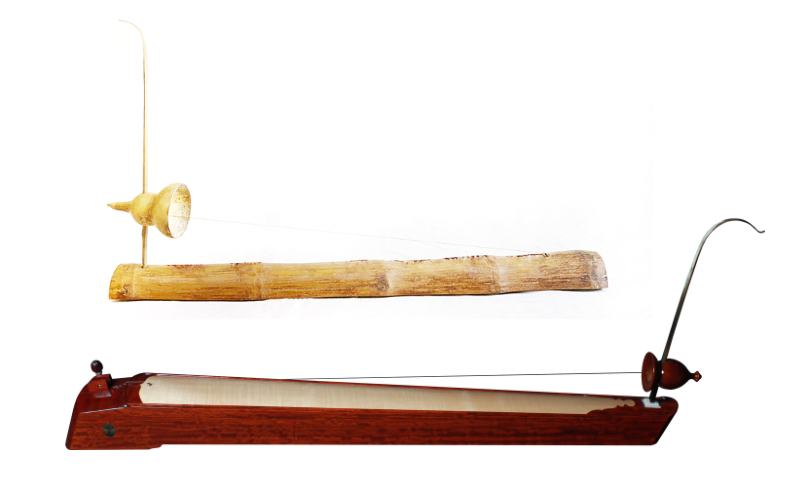
This is a one-string instrument made from bamboo, and it measures approximately 120 cm by 12-15 cm. The single string runs through the body. It used to be made of silk but now is usually metal. The sound is very rich, which creates a peaceful and warm sound much loved by the people.
Dan Nhi
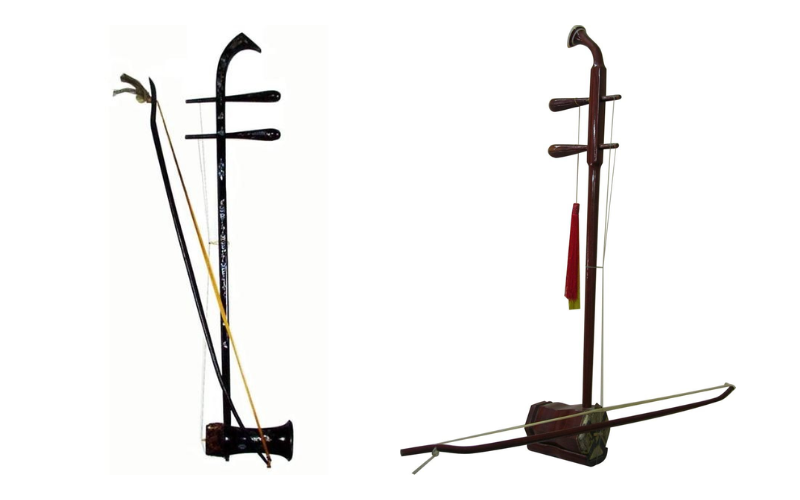
The Dan Nhi, or Vietnamese two-chord fiddle, has been a standard Asian string instrument for a very long time. It is loved and respected by the people and is considered precious and a link with their ancestors. It still plays an important role in Vietnamese music to this day.
The design resembles other Asian string instruments, and it can be played seated or standing using a small bow. It has an interesting sound that the Vietnamese call “Dan Co,” a stork, as they think that is what it sounds like. The sound is quite mournful and is often used for sad songs.
India
Indian music came into vogue in the West courtesy of The Beatles and their trips to the Maharishi. George Harrison formed a deep friendship with Ravi Shankar and his family and learned to play the sitar. It was included on several Beatles tracks. For example:
[bl]- Norwegian Wood (This Bird Has Flown) from Rubber Soul.
- Within You Without You from Sergeant Pepper.
Sitar
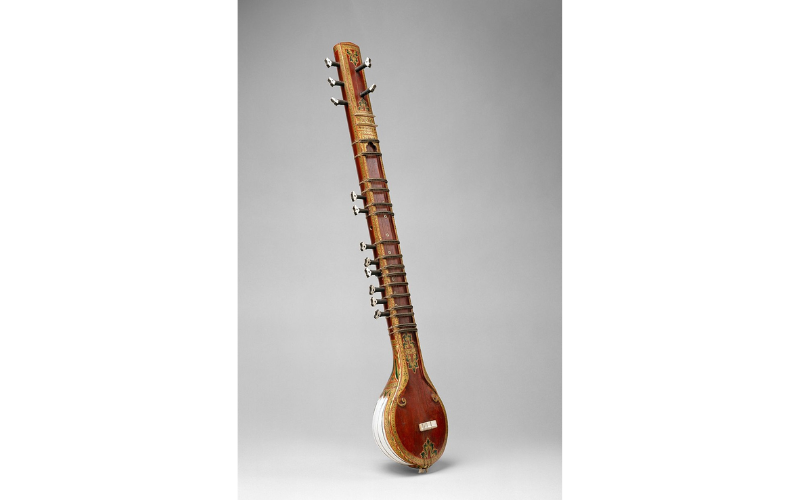
An instrument we are all now familiar with goes back a long way in Indian culture. It has seen changes and was redesigned into its present form in the 18th Century.
A complex instrument…
The sitar is made from wood and can be quite ornate in its styling. It can have anything between 18 to 21 strings. Of those, six or seven run over the curved frets and are the strings that are played. The other strings are “sympathetic” strings that resonate.
The frets are moveable, and the played strings run to tuning pegs at or near the head. The sympathetic settings run to smaller pegs situated on the neck.
The instrument has two bridges, one for the played and ‘drone’ strings, the other for the sympathetic strings. It is a complex instrument to play and the musicianship required is at the highest level. Here are father and daughter, Ravi & Anoushka Shankar Live in Bangalore, doing just that.
Sarod
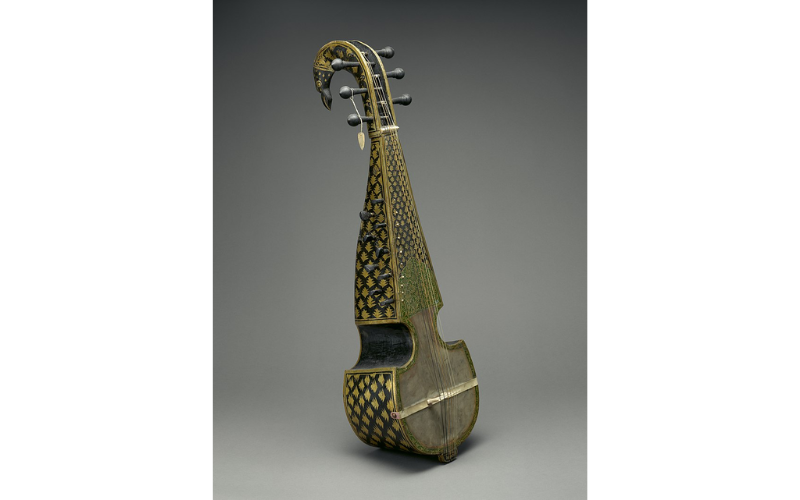
A brief mention of the Sarod, which is a stringed instrument predominately from Northern India. This has a metal fingerboard and creates a unique sound important to the music of the North.
The design resembles something you might get if you cross a sitar with a violin. Unlike the sitar, which has a sweet sound, the sarod has a deep and dark sound that acts as a great contrast when they are played together.
Its origins are unsure, but by the 18th century, it was an established instrument in traditional Indian music.
Enjoy Learning About Different Kinds of Instruments?
If so, take a look at our detailed articles on Bowed String Instruments You’ve Never Heard Of, Musical Instruments of the Medieval Period, String Instruments in an Orchestra, and What’s the Difference Between a Cello and Double Bass for more useful information.
Asian String Instruments – Final Thoughts
These instruments have played an important role in the cultural development of all Asian countries. And there are so many we have had to leave out. However, you get a feeling of their importance in the cultures they represent. And how many of them may have come from a single source.
The expression “The Mysterious East” is never more appropriate in the mysterious instruments that evolved there.
Until next time, let the music play.
