

There can be very few people on the planet who haven’t heard this song. And there can be very few guitarists who haven’t tried to learn the solo at the end, commonly ranked as one of the five best solos that have ever been recorded. Yes, you can learn the notes, that is not the hard part. But try making it sound like they do.
Don Felder and Joe Walsh alternated during the solo, and the harmony parts at the end were them both together. But there is much more to the song than just a great guitar solo. Since it came out in December 1976, people have come up with theories about the meaning behind “Hotel California” song by The Eagles. So, I decided to explore some of them. But, first, some context.
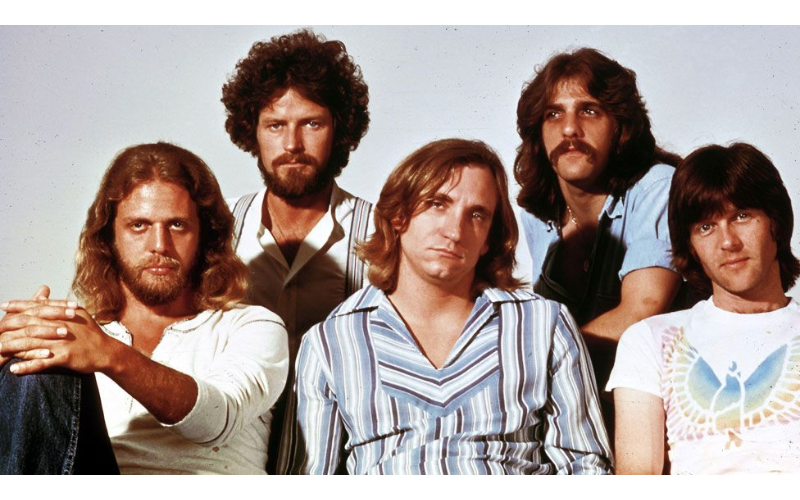
A Song of Legendary Status
“Hotel California” the song came from the album of the same name, Hotel California. The album reached #1 in seven countries and the Top 10 in six more. It sold ten million copies worldwide in its first year. Now, it’s one of the biggest-selling albums ever, with sales of over 32 million copies. The single, released in 1977, made the Top 10 in eleven countries.
It’s a song that has captured the imagination of people now for nearly 50 years. And it is a song with some strange lyrics. Even the tempo could be described as “Neo-Reggae,” which is rather strange for them.
Lots of question marks…
Winston Churchill may have called it a “riddle that is wrapped in a mystery and inside an enigma.” When you open the album cover for the first time, you are entering a strange world of interesting characters and confusing images. There is a lot more to look at and consider inside this epic song other than just the well-known intro. Let’s open it up and have a look at what “Hotel California” means.
The Setting
It was Glenn Frey who had the idea for the setting. A man driving in the desert in the dark. He comes across a hotel with its “shimmering light” and, as he is tired, decides to rest for the night. It mirrors the idea of a 60s song by Gene Pitney, “Twenty-Four Hours From Tulsa.” The narrator is also driving at night and sees a hotel with a “welcoming light” and decides to stop.
The imagery in both songs goes a little deeper. The Eagles write that as the narrator arrives, there is a woman in the doorway. In Pitney’s song, there is also a woman as the narrator pulls up at the hotel. But, from there, Pitney’s song follows a simple pathway. “Hotel California,” on the other hand, takes us through a series of sinister turns with some interesting characters.
Meaning Behind “Hotel California” Song By The Eagles – The Characters
There are plenty of characters in this song, and some of them carry no obvious explanation. Here are all the players, if you will, in this twisted, sinister tale.
The Lady
The narrator meets her when he arrives. She could be a hotel receptionist, but she could be something a bit more sinister than that.
The Voices In The Corridor
As she takes the narrator to his room, he hears voices calling for help possibly. They must have been calling for something or offering a warning.
Tiffany-Twisted
Allegedly, a reference to a previous girlfriend of Don Henley. “Mercedes-Bends” is a clever play on words to relate the car to actually being bent, or twisted.
The Captain
The narrator is in his room or whatever they have placed him in, and he calls up “The Captain” for some wine. Is The Captain some sort of supervisor or manager in the establishment, and he is asking him for a drink?
Voices
Unidentified in the lyrics as to who or what. They wake the narrator up in the middle of the night.
The Night Man
Finally, there is the night man. He seems to be preventing the narrator from leaving when he has decided he doesn’t want to stay.
The Imagery
The way the story is set out is sinister and could be viewed as ominous. Glenn Frey wanted to try and capture the atmosphere of “Twilight Zone.” They wanted to construct something rather strange, and they certainly did that.
Meaning Behind “Hotel California” Song By The Eagles – Possible Explanations
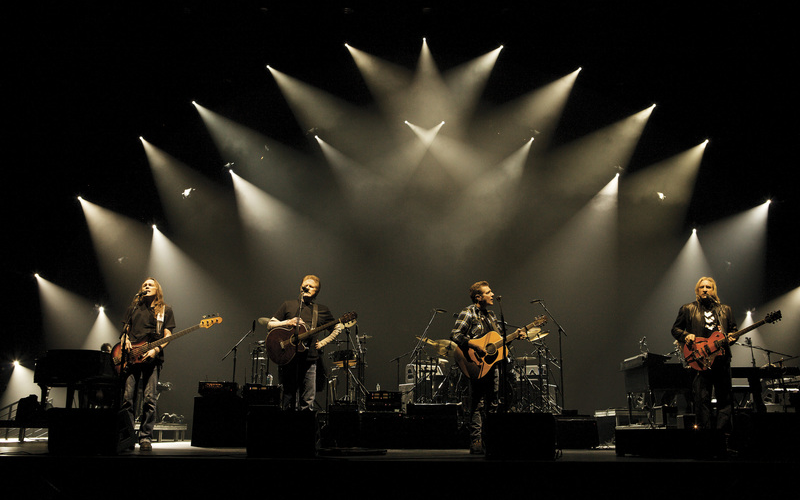
Needless to say, there are plenty of explanations about what “Hotel California” by The Eagles means. But, like any story such as this, you can read into it whatever you like. I may well be guilty of that myself later on.
Drug Use
You can find references that could relate to taking drugs. Some have assumed that driving through the desert is just a hallucination. The characters that are encountered are either imagined or just inebriated interactions with other people.
The line “stabbed it with their steel knives” is seen by some as a cocaine reference. That’s because many coke addicts would use knives to administer it. Also, the poignant line that they “can’t kill the beast.” In other words, they can’t rid themselves of dependency and, ultimately, their addiction.
Likewise, the line, “You can never leave,” could refer to people never being able to get rid of their addictions. But, of course, that isn’t true because people do.
War
Some have seen some sort of hidden relationship with war. Especially the war in Vietnam. The tragic war in Southeast Asia is burned deep into the American psyche, and it is often imagined to be related to plenty of things.
The song came out in 1977, and the war ended when American soldiers hurriedly left Saigon in April 1975. Was it still prominent in their memory? Possibly, but I doubt it is something they would want to dwell on.
Many young boys “checked out” after Vietnam…
Their memories of what they saw and experienced meant they could never emotionally leave that place. However, those are rather loose associations, and war doesn’t seem to be a plausible meaning behind “Hotel California.” For me, there is a more tangible explanation. But, before we move on to that, let’s give some consideration to what The Eagles themselves have said.
Changes
And I don’t mean personnel-wise. Although there were few of those. I am talking about their mindset. It was 1972 when The Eagles were in London at Olympic Studios. They were working with one of the great producers of the time, Glyn Johns.
The outcome was a first album simply entitled Eagles. It was all very easy-going and happy, with no darkness to it. Just four fresh-faced and eager young Country Rock musicians writing songs and having a good time. There was one track on the album I remember that raised an eyebrow or two – “Witchy Woman.”
But, it was hardly sinister and deep. Yet, five years later, the outlook of the band and the personnel had changed. There were some very philosophical lyrics in their songs by then. And, of course, then came “Hotel California.”
What Did The Eagles Say About It?
As is usual with most Rock musicians, you ask them something one day but then the next day, it all changes. Depending on which way the wind is blowing, I suppose.
Drummer Don Henley
He has made some comments about the meaning of the song “Hotel California.” He has said it represents:
[bl]- The “End of Innocence,” a later solo track by him. Maybe it was a plug for it?
- The pull of artists to Los Angeles who want to become stars.
- A socio-political statement.
- He told Rolling Stone magazine it was a symbolic piece about the mess that America is in.
- Conflict – good against evil, light against dark, and secular against spiritual.
So, you can take your pick from that lot.
Rhythm Guitarist Glenn Frey
Glenn Frey has also offered his viewpoints. He said the song was:
[bl]- An effort to fulfill the idea to make a scary song.
- It is full of imagery and weird happenings to create something strange.
- The “steely knives” line was a shout-out to Steely Dan, who had done the same for The Eagles on their track “Everything You Did.”
Frey also referenced author John Fowles saying the imagery of the song created the atmosphere of his book The Magus. That is a book about a man who is in a strange setting and doesn’t understand what is going on around him. Not really the basis for “Hotel California.” Interesting comments, of course, but none of them take us any closer to the truth about “Hotel California.”
Life in the Fast Lane
So sang The Eagles on a track in the album Hotel California written by Joe Walsh. What was that about? A reckless slide down a hedonistic lifestyle that will end in disaster. In the song, it is compared to driving too fast. Is that a clue, I wonder?
If they could have put in enough notes, perhaps, they should have called the song “Life In The Fast Lane in LA.” That is probably what they are talking about. And, when you have what is a dangerous obsession to become famous, you get sucked into the lifestyle.
It Will Destroy You
I have been to Los Angeles once, many years ago, and I went down to the Sunset Strip to the Troubadour. A mecca of music from the past, it was one of life’s letdowns. The band was pretty good, but most of the people didn’t seem to be there for the music.
The place was full of people locked into this lifestyle. Most of them didn’t seem to know what year it was, let alone what day. I often wonder how many of those people are still with us. It is a toxic environment for some, and one that, if you get lured into, will destroy you.
Yes, you can check out of the scene anytime you like. But, do you ever really leave it, to paraphrase two lines from the song? Some don’t. It’s all glitz and glamor in West Hollywood, a bit like the other Hollywood just down the road where nothing is real.
Was That The Inspiration?
The Eagles, although not from the area, spent a lot of time there playing and “socializing.” Was that the inspiration behind the song, or at least part of it? Was it a seed that sprang to life later? Because, judging by their actions, they weren’t exactly innocent themselves.
There are plenty of hedonistic references and excuses for certain types of behavior in the song. It tells you to “bring your alibis,” in other words, your excuses. And it talks about “mirrors on the ceiling” and “pink champagne on ice.”
So, Where Is All This Going?
Maybe towards finding some form of understanding. It’s impossible to know for sure because even Henley and Frey don’t. Or, perhaps they just don’t want us to know to keep the game going.
Does The Imagery Hold The Clue
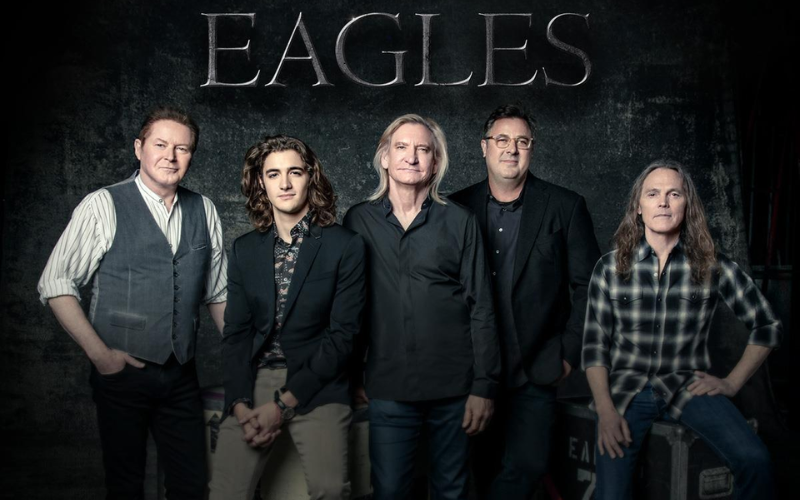
There are texts that, as we have already mentioned, are quite sinister. And some even point to specific situations and even environments.
The Prisoners
There are prisoners there that are mentioned as being at the place because of “their own device.” Does that indicate they are being held at this “hotel” because of something they have done? Or, maybe, it is an institution where people are “cured” of addictions.
The Master’s Chambers
They gather there, it says, to have a feast. The word “feast” could be used as a fill to rhyme with “beast” in the far more important line after. Or, it could indicate a treatment room where people gather to discuss their problems. A common technique in some environments.
The Steely Knives
I don’t think that has much to do solely with drug use. Although, as we shall see, drugs could be a “bit part player” in the scenario. It could be a subtle nod to Steely Dan, as I have already mentioned. But, there could be a double entendre. A nod to Steely Dan, but it could also represent the advice, or help given to overcome what problems they are experiencing.
“The Beast” could represent whatever affliction they are suffering. They try to kill their ‘beast’ with the advice and guidance offered, the steely knife, but it doesn’t work. It doesn’t kill ‘the beast.’
Running For The Door
Like some that are held for whatever reason, there is this urge to get away, to be free. This could be an important part of this story because we see the narrator “running for the door.” He is trying to find his way back to “where he was before,” presumably the entrance. But, there is what could be termed the “killer line” left to the very end – “You can never leave.”
Want to Learn More About Famous Musicians and Songs?
If so, check out our thoughts on Is Stan Based On A True Story, Is The Song Black Betty Racist, The Meanings Behind Wade In The Water, What Instrument Did Louis Armstrong Play, Did Elvis Write Any Songs, and What is The Forbidden Riff for loads more interesting musical information.
Also, you obviously need to really listen to music to truly appreciate it. So, check out our in-depth reviews of the Best Sound Quality Earbuds, the Best Noise Isolating Earbuds, the Best iPhone Earbuds, the Best Headphones For Rock & Metal Music, the Best Headphones for Music, and the Most Comfortable Headphones you can buy in 2024.
Meaning Behind “Hotel California” Song By The Eagles – Final Thoughts
So what is this all about? It is a dark and sinister story to which the music bears little or no relevance. The music could be a different story altogether, and it wouldn’t matter. It is the lyrics, whether supported by the music or not, which make it worrying.
Looking at the song as a piece of work, I feel it is unlikely that it had its ideas laid out before it was written. It doesn’t feel like that. Rather, it feels like they had an idea, and it became more cryptic and sinister as it went on. They added piece upon piece, line upon line, as they thought of them to take it to the scary place it ended up.
But we are here to find the meaning of “Hotel California.” An answer to that question will be subjective. But, my opinion is that it crosses over three different experiences that all come together.
1 The Los Angeles Experience
I have already talked about it, but as the song “House of the Rising Sun” says, it can ruin many young boys. Even though “Hotel California” is not about New Orleans, the same things apply. Most of The Eagles had that experience. Especially Frey, who was known to frequent The Troubadour when he wasn’t working.
2 The Quest For Fame and Glory
This is the reason many people went to Los Angeles, especially in the 70s. You can get hooked on a lifestyle of parties, drugs, socializing, and more drugs. Frey and Henley, and probably Joe Walsh, had that experience. Life in the fast lane until it creeps up behind you and says “goodnight”, or if you are lucky, “goodbye.”
3 Recovery
The only way out of this cycle is the rehabilitation unit, the clinic, if you like. A place where you can “dry out.” Wasn’t it in one of those places that Glenn Frey went to “save” Joe Walsh? Walsh, at the time, says he couldn’t even pick up a guitar without being on something.
But some people can’t handle the pain of withdrawal from drugs, alcohol, or both. Instead, they “run for the door,” trying to find their way back to the “place they were before.” But, then they are told by “the night man” they can try to go, but “you can never leave’’. In other words, it has a hold on you now. Unless you do something about it.
Is part of the song about one of these clinics? Maybe the “Hotel” they refer to? Are the voices he can hear as he walks down the corridor perhaps screams of withdrawal? Are they prisoners because of the lifestyle that has caused all this? Maybe, or again, maybe not. We will probably never really know. Welcome to the Hotel California.
Until next time, happy listening.
