

This is one of those topics that is not going to be easy. If you are putting together a list of operas that are worth going to see, you won’t be short of choice. Creating a list of operas worth watching with only limited space to comment, I am bound to miss some people’s favorites.
But, some do stand out for varying reasons. I shall certainly include those and maybe a surprise or two.
The Golden Age of Music
Most operas came from what we call the “golden age of music.” Although, it has to be said, not all. But, in essence, composers don’t write them like they used to.
But, that might be unfair considering the composers from the past who did write them are very difficult to emulate.
Why Are They Still Popular?
I don’t think great works of art ever lose their attraction. And that applies to great artists as well as great composers.
We still stare in awe at the works of Van Gogh, Rembrandt, Renoir, Monet, and others. Just as we still listen in wonderment to Mozart, Beethoven, Bach, Tchaikovsky, and dozens more. That is why the venues are still packed when a performance is shown.
What Is It About Opera?
The music, obviously, but the storylines are often intriguing, dramatic, and in many cases, tragic. It draws us to them. Romantic themes and human dramas are the center point of most operas. Similar to the films of today.
And The Music…
Not much needs to be said about that. Even today, some operatic music is popular for no special reason other than it is stirring and emotional. Some have even scaled the heights of what we know as ‘popular’ music. Pavarotti’s “Nessun Dorma” from the opera Turandot is an example.
The Great Composers
Most turned their hand to opera at some point. Mozart was well-known for his. Beethoven, though, only wrote one, which on the face of it seems strange. His work, “Fidelio,” sometimes called the “Triumph of Marital Love,” was his one attempt.
It wasn’t for lack of appreciation, and it was well-received. But, Beethoven’s efforts were moving to other areas. And, unlike Mozart, he didn’t need to write them for financial reasons. Mozart was almost forced to write them toward the end of his life to earn a living.
So, let’s take a look at some of the operas that have inspired us throughout the generations up until today, starting with the aforementioned German genius.
Fidelio: An Opera In Two Acts by Ludwig van Beethoven

As I have already said, this was the only opera by Beethoven. It is a story about a woman, Leonara, who tries to rescue her husband, Florestan, as he is about to be sent to prison. To do this, she assumes another identity by dressing as a man, Fidelio.
William Tell Overture (Finale) by Gioachino Rossini
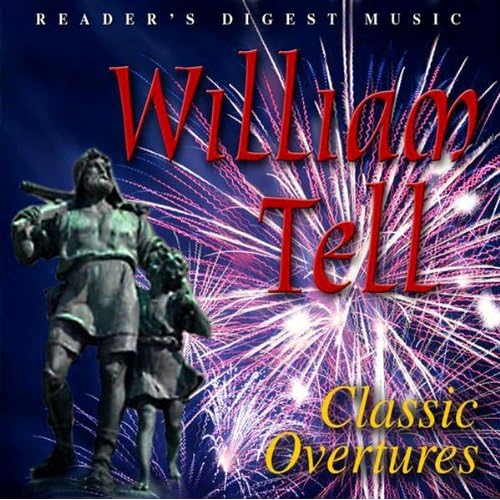
One of the most well-known operas by Italian composer Gioachino Rossini, with its famous Overture. It was Rossini’s 39th and final opera before he went into a form of retirement. I say a form of retirement because he continued to write cantatas and some sacred and secular music.
It is a very patriotic opera to the Swiss, especially in the final act. This is portrayed by the famous finale of the overture. This tells of the Swiss army’s victory in a battle against Austria’s repression to free their homeland. An exciting opera with a thrilling finale, it premiered in Paris in 1829.
Carmen by Georges Bizet
Les Toreadors from Carmen Suite (March of the Toreadors)

Bizet was a French composer in the Romantic period. He is best known for his operas, of which Carmen is probably the most famous.
This story of love, deceit, and intrigue was based on a short novel by Prosper Merimee. It contains two of Bizet’s most famous operatic works.
Not Highly Thought Of At First
The content of the story is one of the reasons this opera has become so well-loved. Although, when it first premiered in Paris, it wasn’t highly thought of. On its opening night, it started well, but gradually the audience grew cold with its portrayal of a decadent society.
Interestingly, it was this very same Paris nobility who were thus engaged in similar activity themselves. Its opening run consisted of just 36 performances.
The Story
Carmen is arrested for a knife attack on another woman. In her attempts to get away with her crime, she seduces an army official, Don Jose, and the two become lovers. He is so infatuated with her that he runs away from the army and goes to her.
But, it doesn’t end well for Don Jose. She grows tired of him very quickly and turns her attention to Escamillo, a bullfighter.
He confronts Carmen at a bullfight, but she rejects him again. And as the roars of the crowd signal her lover’s triumph, Don Jose stabs and kills her. She dies as Escamillo takes the adoration of the crowd.
Two Well-loved Songs
Early in the performance, Carmen sings “The Habanera” in a bar. This sultry, explosive performance drew criticism and admiration at the time, but it is one of the early highlights.
By the time we get to possibly the most well-known piece of music, the “Toreadors Song,” the first audiences were uneasy. That song is listed as an example above.
The song is used to introduce Escamillo to the audience. Today a wonderful, exciting piece of music, but then associated with deceit and intrigue. It premiered in Paris in 1985.
The Marriage of Figaro( Le Nozze di Figaro) by Wolfgang Amadeus Mozart

This opera by Mozart holds a special place in the world of opera. It is considered by many aficionados as being the greatest opera ever written. They cite the balance of the story and music content that includes wit, humanity, and soaring music.
It is a “comic opera” composed and premiered in 1786 in Vienna, Austria. It was based on a stage play about Figaro and Susana, who manage to still get married. This is despite the attentions and philanderings of Count Almaviva, their employer who tries to seduce Susanna.
Almost a forerunner of the “French farce” in some ways. It is both romantic, meaningful, and at times extremely funny. Always one of the top ten performed operas today.
Tosca by Giacomo Puccini
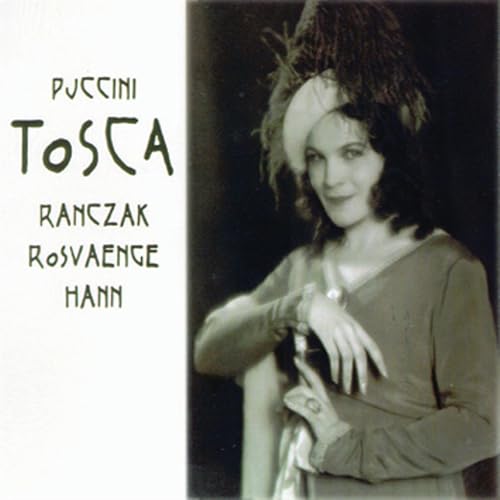
This is also a well-loved opera and is usually on everybody’s list of operas worth watching. It is a tragic tale of jealousy and passion set in Rome in 1800. It was set in a time when Napoleon was trying to gain control over the Kingdom of Naples.
The story revolves around Floria Tosca, herself an opera singer, as she tries to save Cavaradossi, her lover, from the police. And, in particular, the rather nasty chief of police, Scarpia.
Puccini’s music is one of the highlights of the opera. Especially the famous aria, “I lived for Art” (Vissi d’arte). The opera premiered in Rome in 1900.
La Traviata by Giuseppe Verdi (Vol.1)

This is an opera by Verdi that is based on a story that is based on a novel by Alexander Dumas, “La Dame Aux Camelias.” Another tragic tale of forbidden love, it makes rather a pointed attack on the total hypocrisy that abounds within the fashionable upper-class.
The Story-line
The romantic Alfredo falls in love with a courtesan to a member of the so-called upper class, Violetta. A courtesan in those days was a prostitute, but one who associated with wealthy and upper-class clients.
Alfredo’s family disapproves as they claim it brings shame to their family that he associates with her.
It was set in the 1700s, by demand of certain influential people, even though it was written about events in the 1850s. It was thought to be embarrassing for the local gentry to be portrayed in such a way. A truthful way, that is.
A Failure
Verdi considered the opening night a failure as the cast, and particularly the lead who played Violetta, was jeered. She was supposed to be a beautiful young girl who incidentally was dying of consumption. She was portrayed by a rather overweight 38-year old that didn’t create the right image.
The tragedy of the story is that Violetta is persuaded by Alfredo’s father to give him up for the sake of the future of the family. She agrees but asks the father to explain to Alfredo why after she dies.
Extremely popular today, and another opera is performed every year in various venues. It is considered one of Verdi’s masterpieces. It premiered in Venice, Italy, in 1853.
Rigoletto by Giuseppe Verdi

Let’s stay with Verdi for another opera, considered another of his masterpieces. It is not an exaggeration to say that Rigoletto is one of the most famous operas ever written.
However, it wasn’t without its difficult times as well. It seems that many operas shone a light on what was going on behind closed doors in the upper echelons of society. Needless to say, some didn’t like that.
Censorship
It was initially censored by the Austrians. They controlled theater and what was performed in Northern Italy at the time. Their censorship regulations were rather strict, to say the least.
It was based on a play written in 1832 by Victor Hugo called “Le Roi s’amuse.” The storyline is a commentary on the Duke of Mantua, a rather interesting individual, Rigoletto, a hunch-backed jester, and Rigoletto’s daughter, Gilda.
When you aim for the king…
Hugo depicted a cynical, womanizing king who got what he wanted in any way he chose. I mean, as if a thing even exists, even today. It was written with King Francis I of France in mind. It was considered at the time a bit too scandalous.
Gilda falls in love with the Duke and sacrifices her own life to protect him from an assassin hired by her father. Another dark tragedy that is epic in every meaning of the word. Verdi’s 16th opera opened finally in 1851 in Venice, Italy.
The Magic Flute (Die Zauberflöte) by Wolfgang Amadeus Mozart

This is an opera that contains everything. A love story, philosophy, Freemasonry, the Queen of the Night, and much more. It is written in a Singspiel format, popular at the time, which is spoken dialogue as well as singing.
It is an opera that demonstrates Mozart’s interest in Freemasonry. Tamino, who is about to become a Freemason, is asked by the Queen of the Night to save her daughter Pamina. She has been influenced in her beliefs by Sarastro, a high priest. Tamino decides he likes the views of Sarastro, and he and Pamina join the community.
The Master’s Finale
The opera had its premiere on 30th September 1791 in Vienna, Austria, just two weeks before Mozart’s early death. It is still a popular opera today.
La Bohéme by Giacomo Puccini
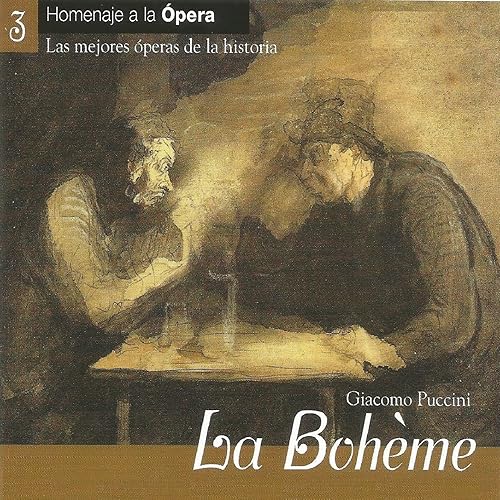
This is another opera from Puccini that never seems to lose its familiarity and, again, like so many others, is still performed regularly today.
Also, like many other works, it is based on the writings of someone else. In this case, the 1851 novel by Henri Murger, “Scenes de la vie de Boheme.” In English, “Scenes of Bohemian Life.”
A different kind of opera…
It is a series of vignettes rather than a novel as we understand the meaning. So, it has no plot as a novel might have. It aims to give an insight into the lives of young people living a Bohemian lifestyle. This opera is set in 1840s Paris in the Latin Quarter.
The Libretto has the relationship between Rodolfo and Mimi and their poverty-stricken Bohemian lifestyle as its main theme. And in true dramatic, tragic opera style ends with her death.
This is recognized as being one of the greatest operas of all time. It was composed between 1893 and 1895. It had its premiere in Turin, Italy, in 1896.
Madam Butterfly by Giacomo Puccini

Puccini’s opera is one of the most loved stories, if rather tragic. It follows the relationship between a young Japanese girl and a US Navy officer.
Pinkerton, the officer, has paid for an arranged marriage with the 15-year-old Geisha, Cio Cio San. People try to persuade him this is not right, recognizing it as a “marriage of convenience,” not love. He won’t listen, and the marriage goes ahead. He is then called back to the US and is gone for three years.
In the meantime, “Butterfly,” as she is known, desperately awaits his return. Finally, he returns to Nagasaki but brings his new American wife with him. In despair, the betrayed and devastated “Butterfly” kills herself.
A Puccini Special
This is, in many ways, how this opera is viewed. It is based on a short story by John Luther Long entitled “Madam Butterfly.” The story was based on stories told to him and on a novel by Pierre Loti.
A devastatingly sad story with beautiful music, it is one of the stand out operas. It had its premiere in La Scala, Milan, Italy, in 1904.
Aida by Guiseppe Verdi

Another example of the genius and mastery of his subject from Verdi. The Libretto omits to define a time where the work is set. But, given the characters and historical setting, it is at a time of some importance in Egypt. It is just called the “Old Kingdom.”
The story is set around Aida, an Ethiopian princess who has been captured by the Egyptians. A senior Egyptian army commander, Radames, falls in love with her. And he struggles between choosing between her or his loyalty to Egypt and his King.
It is made more complicated because Radames is also the focus of attention for the King’s daughter. He chooses Aida but is tried as a traitor and found guilty, and sentenced to be buried alive by the priests.
He is taken to a dark vault and sealed up to die. Hoping that Aida has escaped to safety, he then realizes she has hidden away in the vault to die with him. Quite a powerful story, to say the least, and one of unrequited love. One of the great operas.
Porgy And Bess by George Gershwin

Not all great operas were written and composed in the periods of the great composers. Some, like this Gershwin masterpiece, might also be termed “modern-day.” It certainly deals with what could be referred to as a modern-day tragedy.
It is taken from an original story, Porgy, and is set in the African-American area of Charleston, South Carolina. And specifically in an area known as Catfish Row. Another tragic love story featuring Porgy, who is a cripple beggar, and Bess. She is trying to escape her life as a prostitute and drug addict.
A modern tragedy indeed…
A few twists and turns leave us wondering what the outcome between them might be. There has been an alternative ending written. However, it ends in sadness, of course.
One of the great songs from this opera is “Summertime.” A momentous effort covered by some great singers. It was premiered in Boston in 1935.
Turandot by Giacomo Puccini
Nessun Dorma (Live) (From ‘Turandot’)

To finish my list of operas worth watching is one of Puccini’s masterpieces. He first became interested in the story after reading Friedrich Schiller’s interpretation of the play of the same name. Although likely, the play from 1762 by Carlo Gizzi was also a motivating factor.
While the play seems to have Persian roots, it is set in China. As he did with “Madam Butterfly,” Puccini has tried to include a flavor of the local musical tastes in the work. Indeed, Chinese musical influences can be heard in at least eight of the themes.
Posthumous Completion
In true Operatic style, there was a tragedy and even more tragedy in the work. But, in this instance, part of that came from Puccini’s death before he had completed the work. It was completed by Franco Alfano and first performed in 1926.
Of course, this work contains one of the most famous opera arias of them all in “Nessun Dorma.” Interestingly, it came to worldwide attention courtesy of the FIFA World Cup in 1990 in Italy. It was the theme tune played before and after the day’s proceedings in the tournament.
Pavarotti’s version captured the imagination of the world and propelled him, “Turandot,” and indeed the world of opera to a whole new audience. I have included a live version from the great man under the heading.
Searching for Amazing Music?
We can help with that. Take a look at our handy articles on the Best Songs About Friendship, the Best Songs About Dreams, the Best Songs About Change, and the Best Songs About the Sun and Sunshine for more great music.
And, if you like opera, you should have a look at our detailed articles on Little Known Facts about the Nutcracker Suite and Tchaikovsky, Amazing Facts About Mozart, and The Romantic Period of Music for more interesting information.
List of Operas Worth Watching – Final Thoughts
True, operas are probably not to everybody’s taste. However, let’s take a quick look at why they appeal to so many:
- Great music composed by some of the great composers.
- Incredible vocal performances by the characters.
- Outstanding storylines, usually with social comments.
- Plenty of tragedy and deceit.
Those are just a few of the reasons why people love opera. And, as many of these works are still popular today many years after their premiere, there must be something in them.
In this list of great operas to watch, I have included some of my favorites. Catch one or two if you can. You won’t be disappointed.
Until next time, don’t wait for the Fat Lady to sing.
